Erik Powell · 3 November 2026
Exploring Adaptive Widget Frameworks for Multi-Tenant Service Architectures
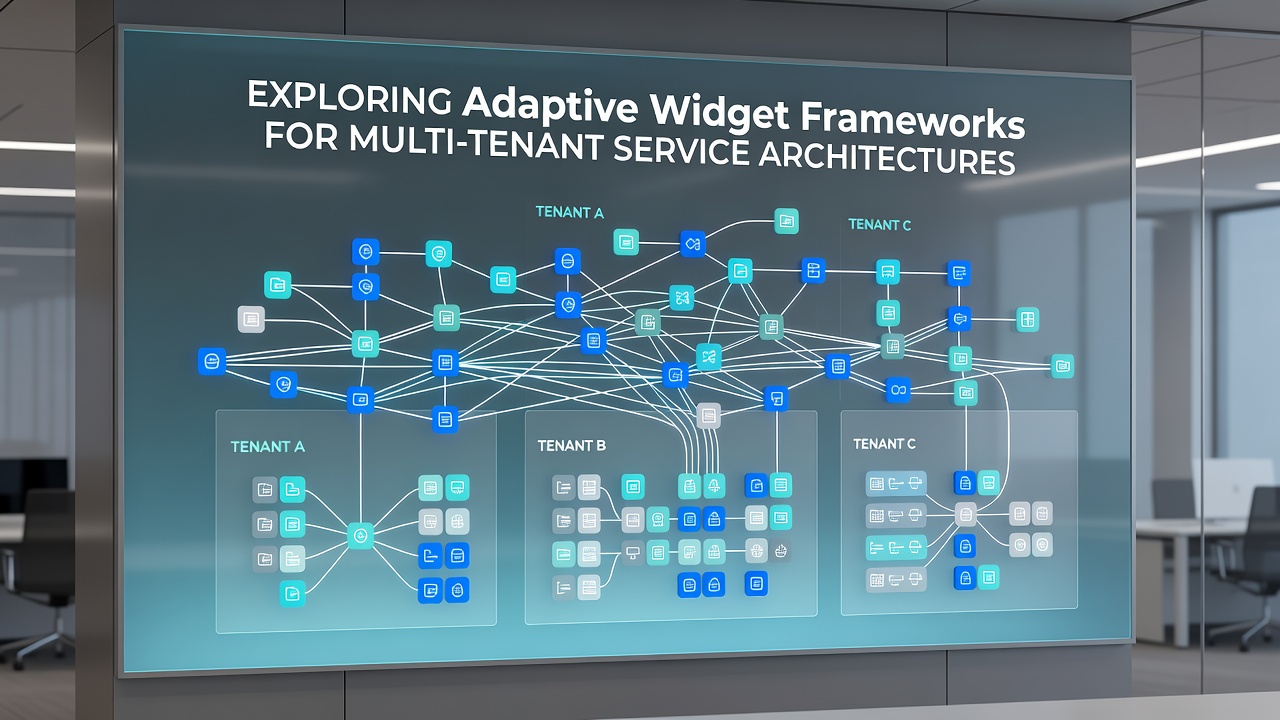
Multi-tenant service architectures distribute a single application instance across numerous clients while maintaining strict data isolation and configuration boundaries, and adaptive widget frameworks extend this model by delivering interface components that respond dynamically to tenant-specific rules, device contexts, and usage patterns. These frameworks combine modular rendering engines with policy-driven configuration layers so that individual tenants receive tailored visual elements without requiring separate code deployments or infrastructure forks.
Core Mechanics of Multi-Tenant Widget Delivery
Widget frameworks in multi-tenant environments rely on a shared rendering pipeline that pulls tenant metadata at request time, then applies transformation rules before output reaches the client browser or mobile application. Researchers at institutions such as the University of Waterloo have documented how metadata caches reduce latency when thousands of concurrent sessions request customized components simultaneously. The pipeline evaluates factors including subscription tier, geographic location, accessibility preferences, and integration endpoints before assembling the final widget markup and associated scripts.
Configuration occurs through declarative schemas rather than imperative code, which allows operations teams to update appearance, behavior, or data bindings across selected tenant groups in minutes. Versioning systems track schema changes so that rollback remains possible if a new rule set produces unexpected rendering results in production.
Adaptation Layers and Their Interactions
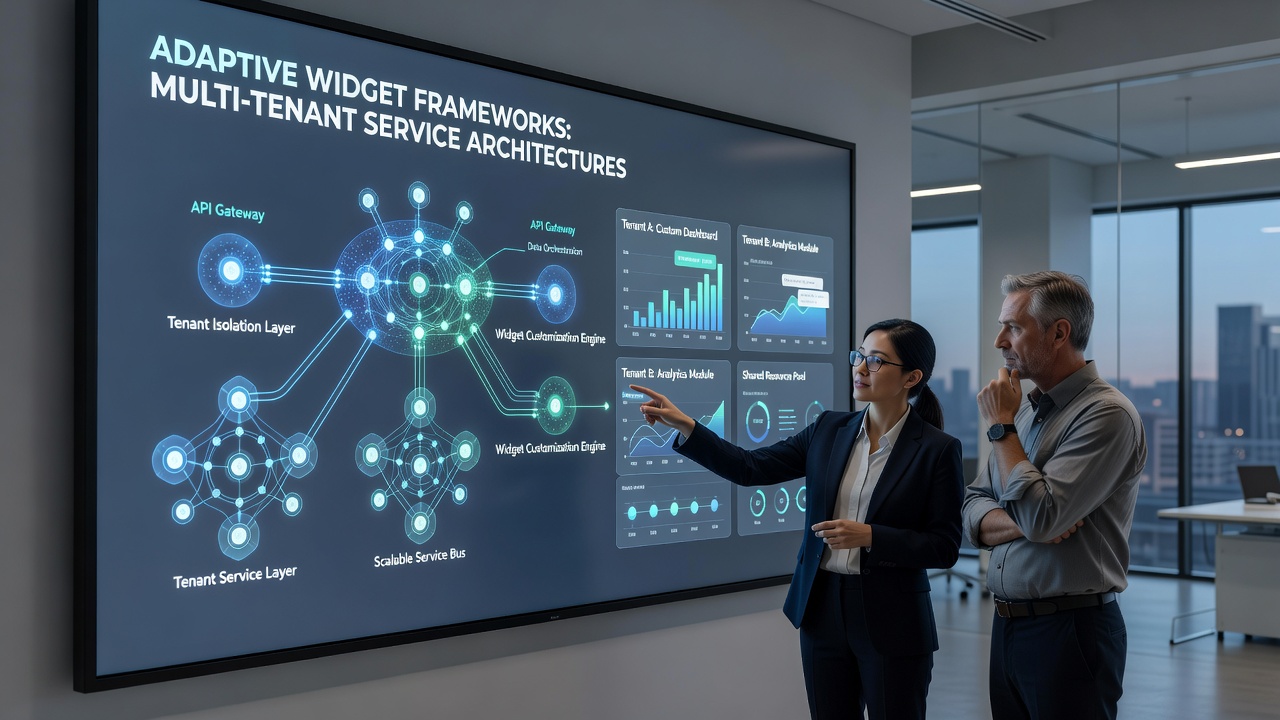
Three primary adaptation layers operate in sequence: context detection, rule evaluation, and resource assembly. Context detection gathers signals from HTTP headers, user-agent strings, and session tokens, while rule evaluation applies boolean and arithmetic conditions stored in a centralized policy store. Resource assembly then selects pre-compiled bundles or assembles fragments on the fly, depending on cache-hit rates and network conditions reported by monitoring agents.
Data from industry reports indicate that organizations implementing these layered approaches observe measurable reductions in per-tenant customization overhead compared with earlier monolithic dashboard designs. Integration with existing identity providers occurs through standardized token exchange protocols that pass tenant identifiers and role claims into the widget runtime without exposing internal user directories.
Deployment Patterns Observed Across Sectors
Financial service platforms frequently adopt server-side composition to meet regulatory requirements around data residency, whereas e-commerce tenants often favor client-side hydration that allows rapid A/B testing of promotional widgets. Both patterns rely on the same underlying framework yet differ in where the adaptation decision executes and how aggressively output is cached at edge locations.
European regulatory guidance on digital services emphasizes auditability of personalization logic, prompting framework maintainers to expose decision trees through administrative consoles that log every rule evaluation with timestamps and input parameters. Similar transparency features appear in documentation released by Canadian federal innovation programs that track technology adoption in small and medium enterprises.
Performance and Scaling Considerations
Benchmark studies published through academic channels show that adaptive widget systems maintain sub-second response times when tenant count exceeds ten thousand provided that rule-evaluation caches remain warm and database connection pools are sized appropriately. Horizontal scaling of the evaluation service occurs independently of the core application servers, which permits targeted resource allocation during peak traffic periods such as end-of-quarter reporting cycles.
Memory profiling tools reveal that widget fragment caches consume the largest share of heap space, yet eviction policies based on least-recently-used metrics keep utilization within acceptable bounds for most deployments. Observers note that organizations monitoring these metrics through distributed tracing platforms identify hot paths earlier and adjust cache lifetimes before user-facing latency spikes occur.
Integration With Existing Tooling
Modern frameworks expose REST and GraphQL endpoints that allow continuous-integration pipelines to validate widget configurations against schema definitions before deployment. This approach aligns with practices documented in reports from the Australian Research Council funded projects on cloud-native application management. Teams integrate these endpoints into existing monitoring dashboards so that configuration drift triggers alerts without requiring manual inspection of tenant settings.
Security reviews focus on preventing cross-tenant data leakage through widget parameters, and penetration testing regimens routinely include attempts to inject tenant identifiers that exceed assigned permissions. Results from such tests inform updates to the context-detection layer and reinforce the importance of signed configuration tokens that expire within short windows.
Conclusion
Adaptive widget frameworks continue to evolve alongside multi-tenant service architectures as organizations seek greater flexibility without proportional increases in operational complexity. The combination of declarative configuration, layered adaptation, and measurable performance characteristics provides a foundation that supports ongoing platform growth across diverse industries while satisfying technical and regulatory constraints documented by multiple international bodies.